Banaras has been a mystical city for centuries alluring not only Indians but the foreigners as well, with its everlasting charm, composure and divinity.
The city has taken many names, starting with Kashi, Avimukta and Banaras to Varanasi today. Of all, Banaras attracted me the most and I would refer Varanasi as Banaras in this piece of writing.
One of the ancient most cities in the world, the city of Banaras has never ceased astonishing people with the intertwining questions of life and death which coexist and seamlessly flow together in the city like two opposite ghats of the Ganges. The city’s tale is incomplete without Shiva, the holy Ganges and its ageless and timeless ghats which have retained their never changing character since time immemorial.
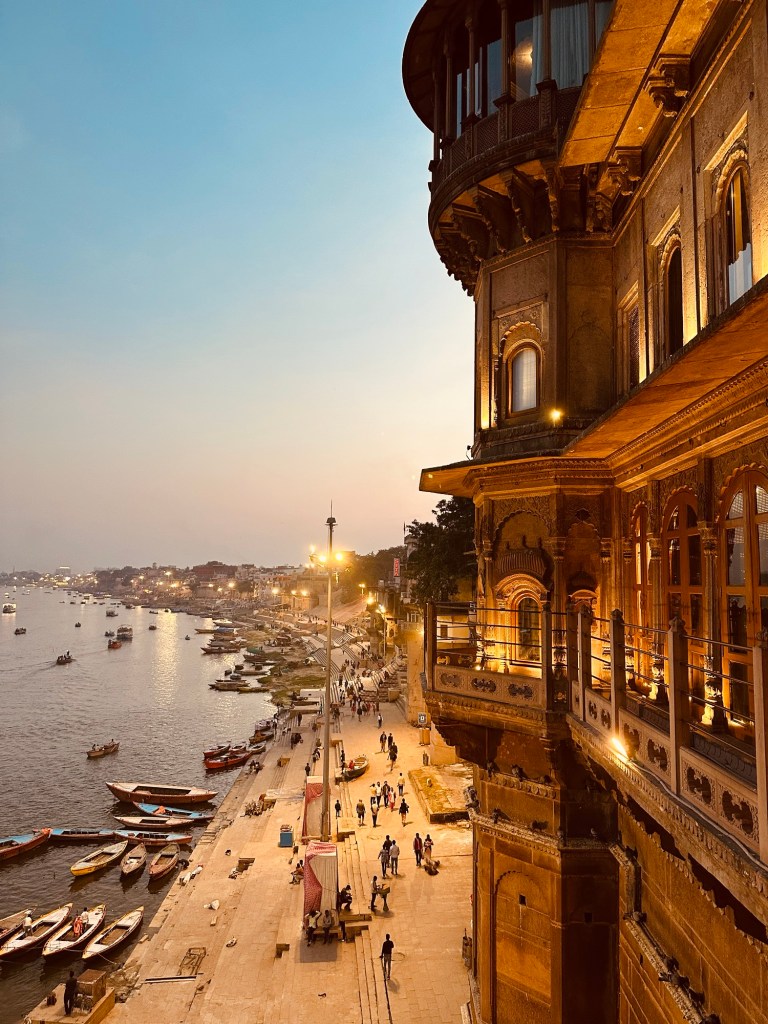
The serenity of the place is inexplicable with temples and shrines at every step, the chant of prayers, the jingling of temple bells, the aroma of camphor and incense, hundreds of men and women taking holy dip in the celestial river from dawn to dusk and the bubbling lanes of the city.
Kashi, the city of primordial Shiva has changed its character, name and shape many times over the years, yet the flat steps called ghats, leading to the Ganges, have preserved their timeless aura, transcending people from material world to a spiritual realm with every single dip in the river of life.
Bustling with activities from morning till late in the evening, the ghats are the lifeline of Banaras. They encompass a long stretch of land along the western bank of the River Ganges. Any visitor who comes to this city of light is bound to get enthralled with the elegance of the enchanting ghats of Banaras.
I have been to Banaras several times since my childhood. In my last trip to the city, I stayed in one of the hotels near the ghats. Being so close to the place, it was much easier to soak in the charm and appreciate the continuum of life on these ghats.
The ghats indeed have undertaken a time travel for hundreds of years when new ghats kept adding up and their names also kept changing over the years. Today, there exist more than 85 ghats, some of which have eventually gained more prominence than others and are quite popular amongst people visiting the city.
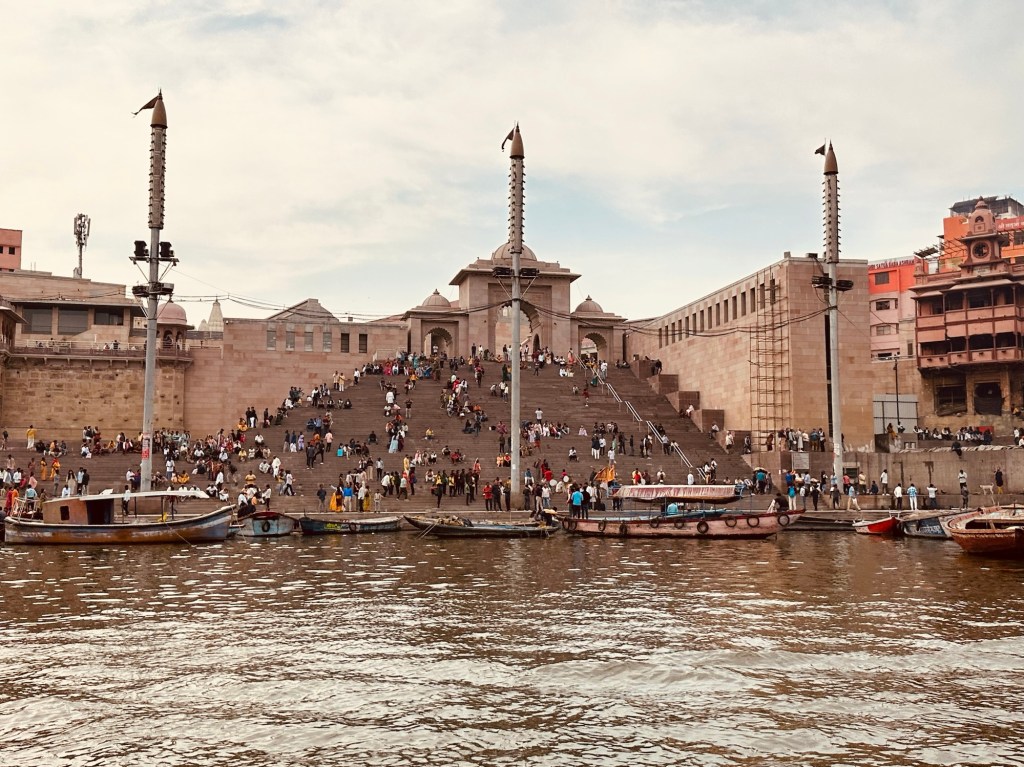
It is not one ghat but a series of ghats constructed from the south and extending to the north of Banaras. Walking on these seamlessly interconnected ghats is like walking through the time, starting from the antiquity to the modernity.
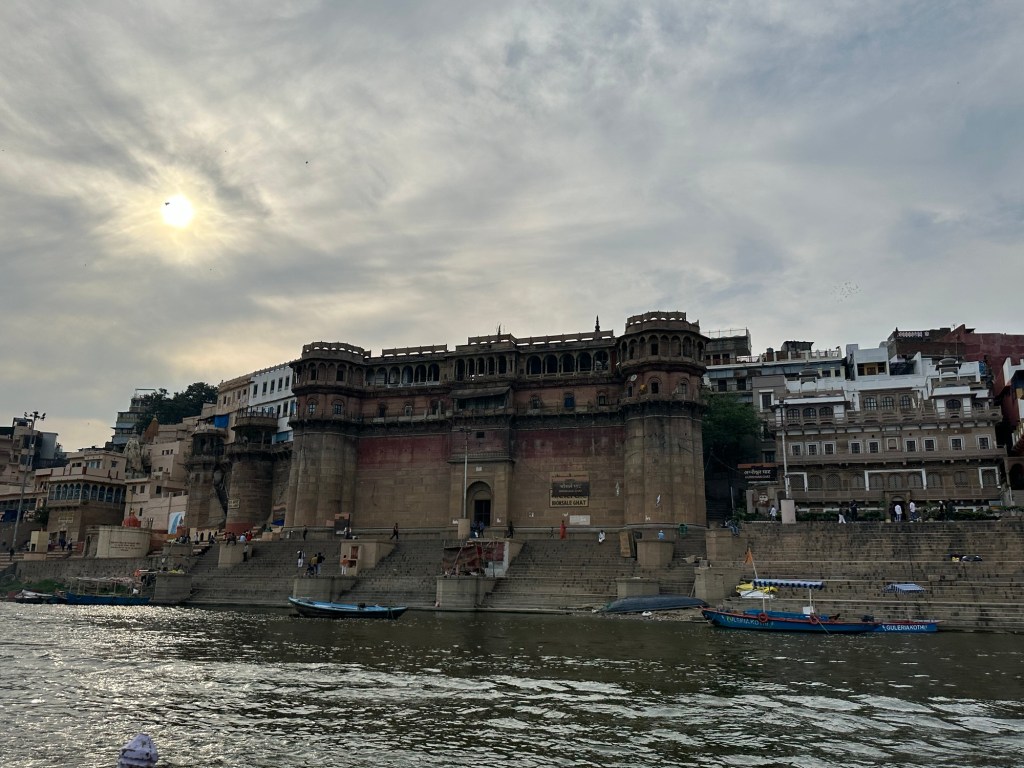
Mostly, the ghats have been named after the kings, merchants and wealthy families who constructed them, however, some of them are named after important people associated with Banaras in some or the other way. One of such ghats is Tulsidas Ghat, named after a famous Vaishnavite saint and poet of medieval India known for his quintessential book called ‘Ramcharitamanas’. Tulsidas is said to have spent his most productive years on the ghats of Banaras. The legendary writer died on Assi Ghat, the first and southern most ghat in the series of ghats.
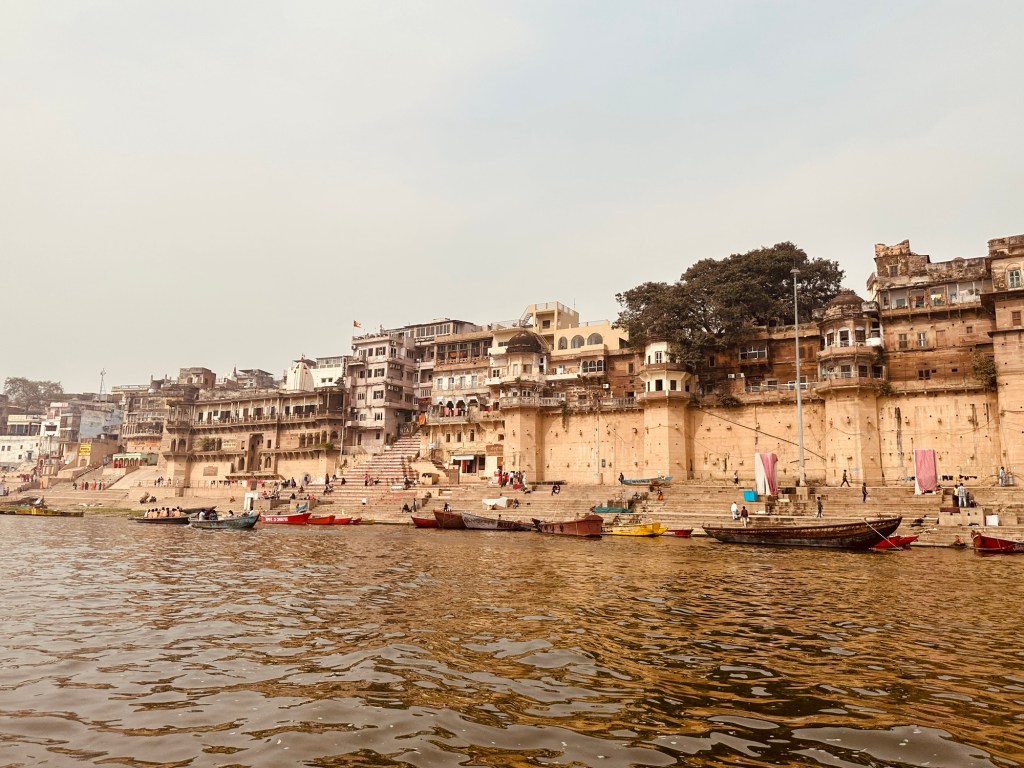
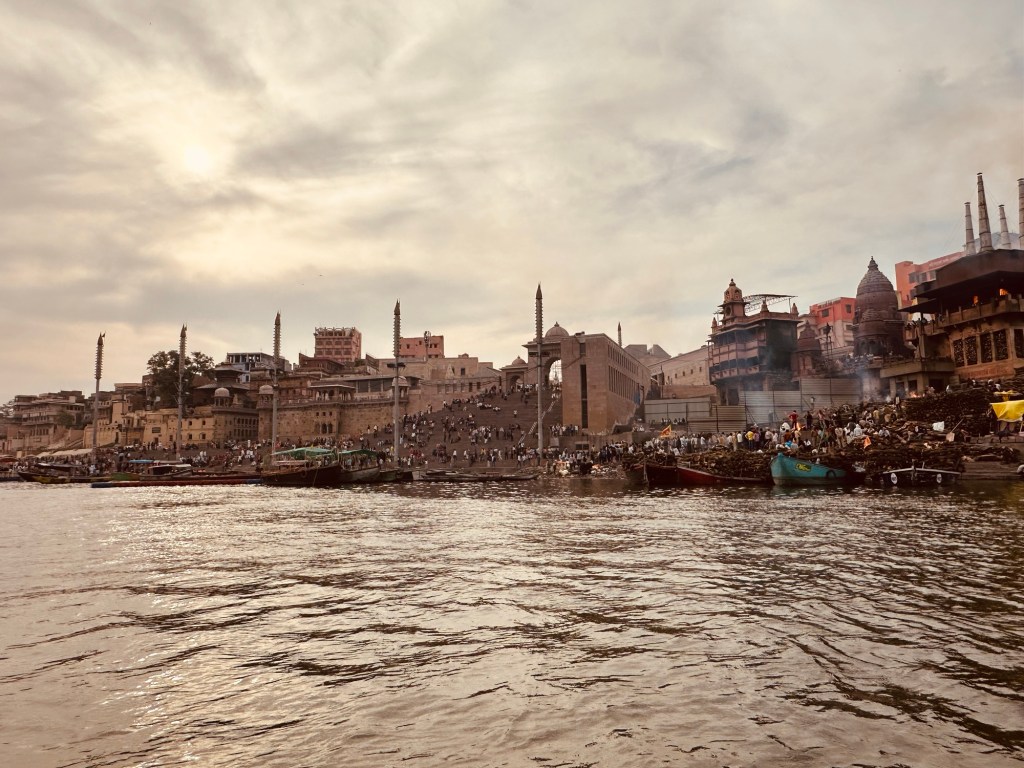
Names like Sita Ghat, Hanuman Ghat or Nishad Ghat are influenced by the all pervasive Hindu mythology especially the Ramayana, an epic based on the life of Lord Ram.
Apart from being a conduit to spirituality and salvation, most of these ghats are architectural marvels too. Their imposing structure, palatial facade, extraordinary masonry and towering spires, domes and gateways indeed speak of the deep involvement of the people who had contributed greatly to the construction of the ghats. For instance, Bhonsale Ghat was built by the Maratha rulers, Darbhanga Ghat by the king of Darbhanga of present day Bihar and Chet Singh Ghat by Kashi Naresh (the king of Banaras).
Ahilya Bai Holkar of Holkar Dynasty of Indore is credited with rebuilding the Kashi Vishwanath temple and a ghat at Ganga. The saintly queen of Maheshwar, where she established her kingdom after her husband’s demise, endeavoured to rebuilt and renovate many sacred shrines and temples of the country through her continuous financial support all her life. Banaras quietly expresses its gratitude to this generous queen even today and a ghat is named after her.
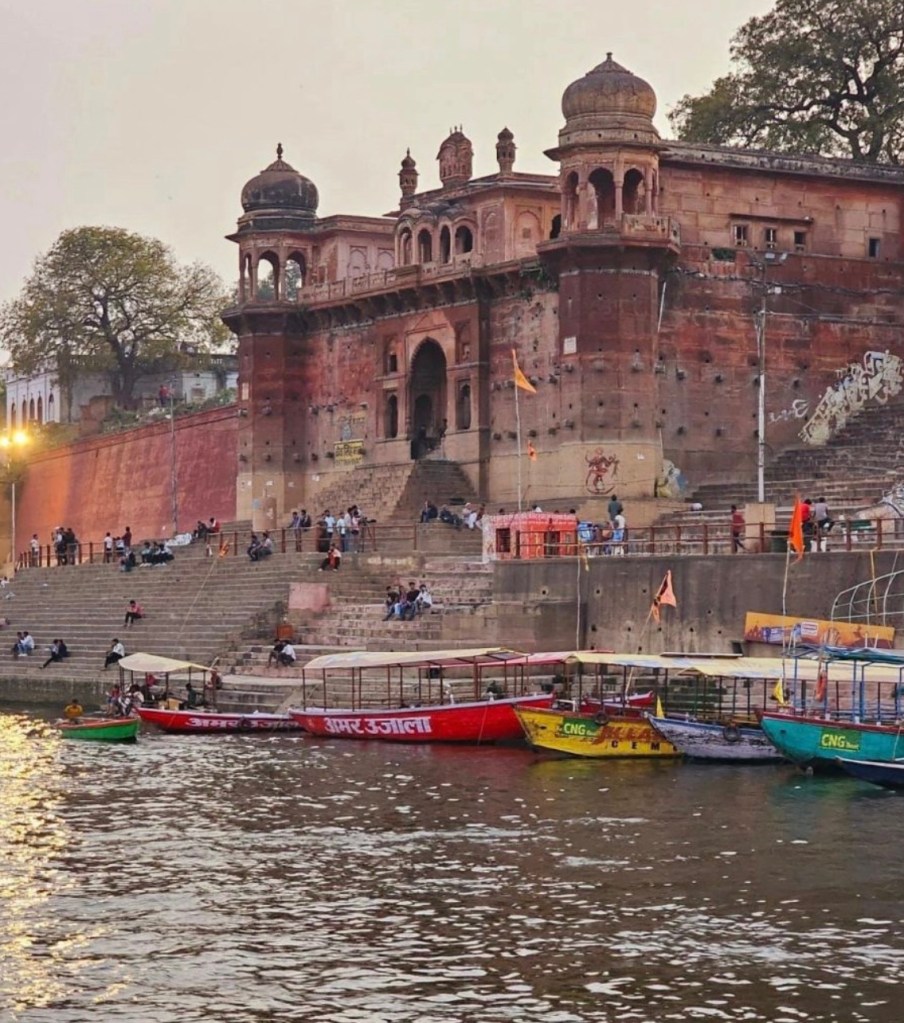
Picture courtesy- a friend
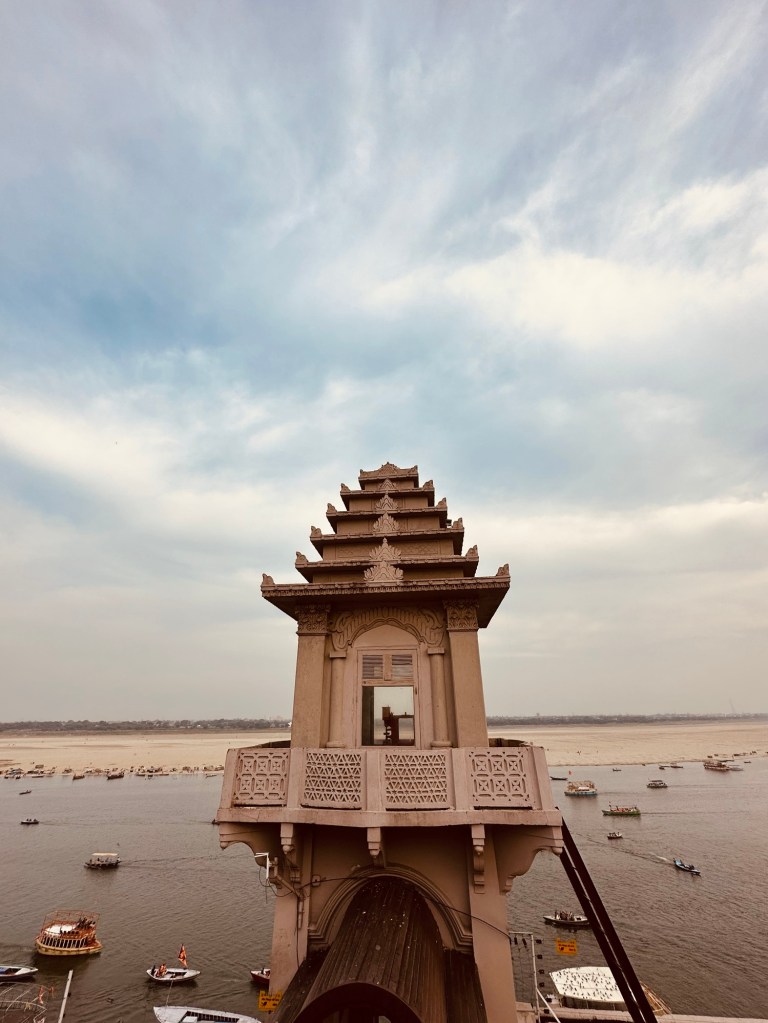
Another ghat which boasts of an aesthetic architecture is Dharbhanga Ghat. One of the important ghats, this one offers a picturesque view.
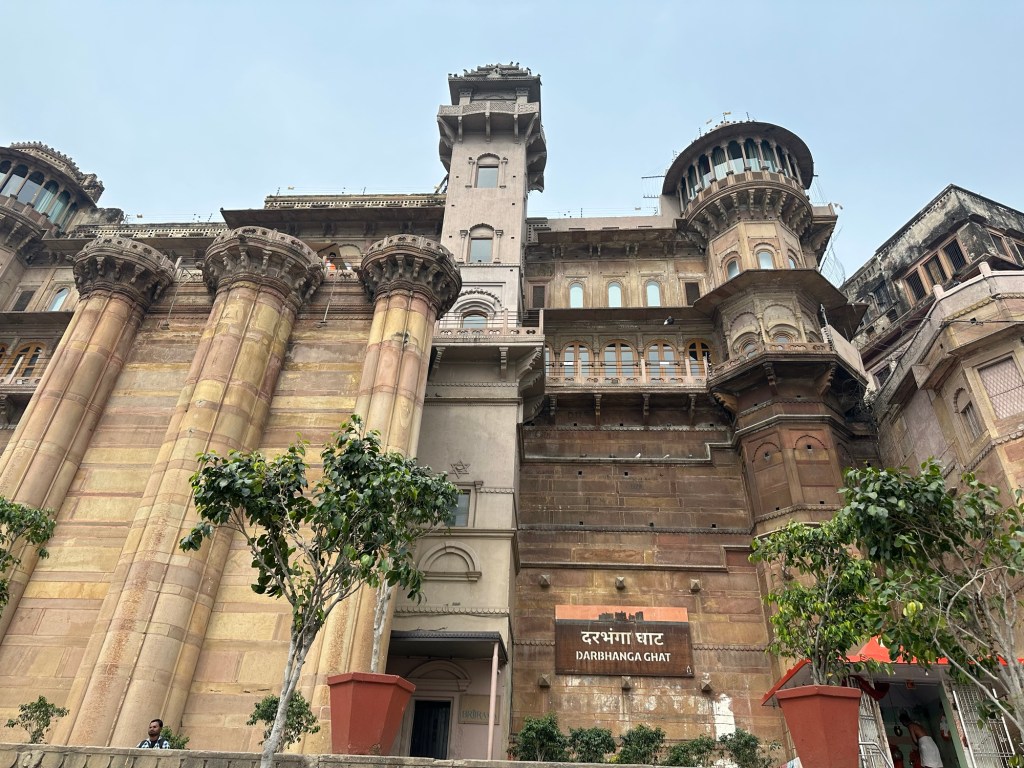
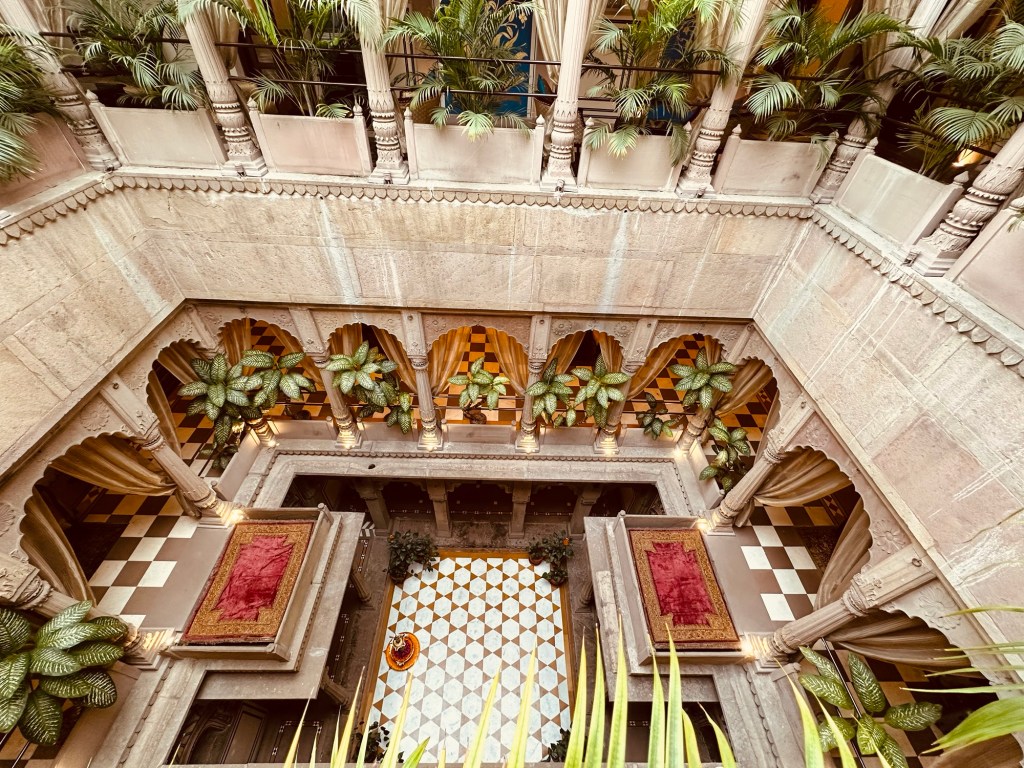
Today, Darbhanga Ghat is adorned by a beautiful royal palace called the Brijrama Palace which is an exotic heritage hotel accentuated by impeccable interiors and defining decor.
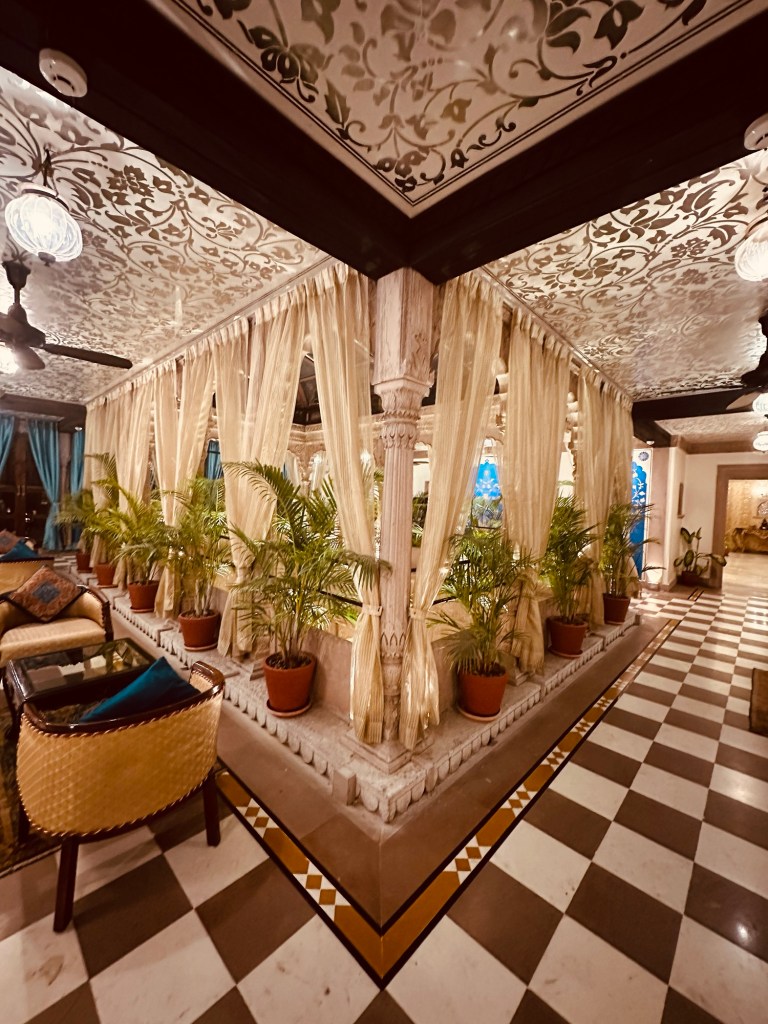
This heritage property mostly attracts visitors from abroad and offers to them a bouquet of exquisite Indian delicacies in their restaurant called ‘Darbhanga’, traditional kathak and santoor performances, a participation in famous Ganga Aarti at Dashashwamedh Ghat and gifting them Bhagwad Gita at the time of departure. The palace also claims to have an elevator which they say was the first elevator in Asia. Whatever be the fact, the elevator catches the attention of the people with it’s unique exterior. The Brijrama Palace leaves an immense impact on its visitors with a palette of rich Indian culture and customs.
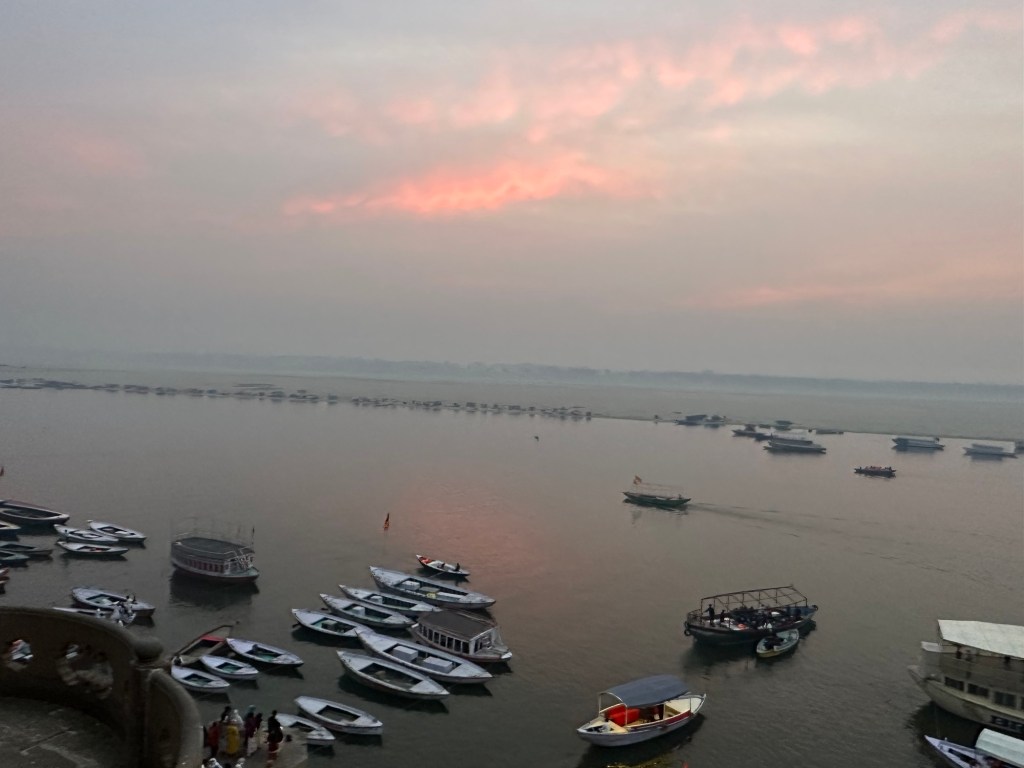
The life in Banaras begins very early in the morning, even before dawn. The atmosphere begins to echo with the chants of mantras and devotional songs. The sound of boats, carrying hundreds of people on a journey most memorable, is quite overpowering.
The ghats yet present a stark contrast that the humankind has faced for centuries, the divide between the rich and the poor. On one hand we find an ornate mansion on Darbhanga Ghat hosting people who are well off, spend a fortune and come to Banaras just to experience its very element of religious Hindu traditions and the city’s way of life. On the other hand, we find people with very meagre resources, who struggle to survive in this city so accommodating. One can still spot widows clad in white sarees sitting in the streets seeking alms. You can see little children and old women selling garlands and diyas for very little money, the tea hawkers carrying a small kettle and selling tea and many people selling Rudraksha rosaries and religious books. The generous ghats accept everyone and are the fulcrum of human activities irrespective of class and status.
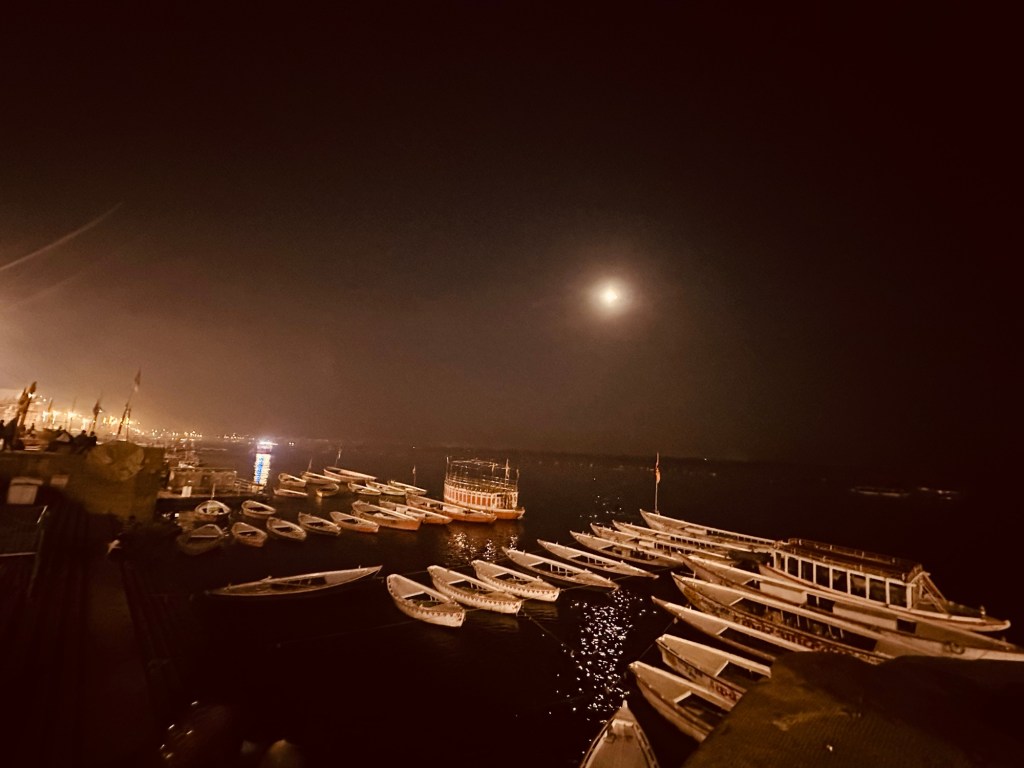
By the evening, the boats come to a halt and queue up along the ghats. I could capture a beautiful sight of these empty boats, mostly white in colour on a full moon night looking graceful and delightful.
Every time I visit Banaras, it becomes more familiar, more welcoming and holier than before. A city of salvation, it invokes an uncanny sense of detachment from the material chase.
The two cremation ghats, called Manikarnika Ghat and Harishchandra Ghat, are very much located amidst the bathing ghats. Cremating the dead is as normal a ritual here as taking a holy dip in the river and performing one’s daily puja in the shrines across the city. Death in Banaras is considered to be a blessing and liberation from the cycle of birth and death.
The rising smoke from the pyres touches every element of human activity at the ghats. The ashes of the dead finally attain their final resting place in the sacred waters of the Ganges. A city of liberation where the ghats impassively watch the centuries old traditions and rituals.
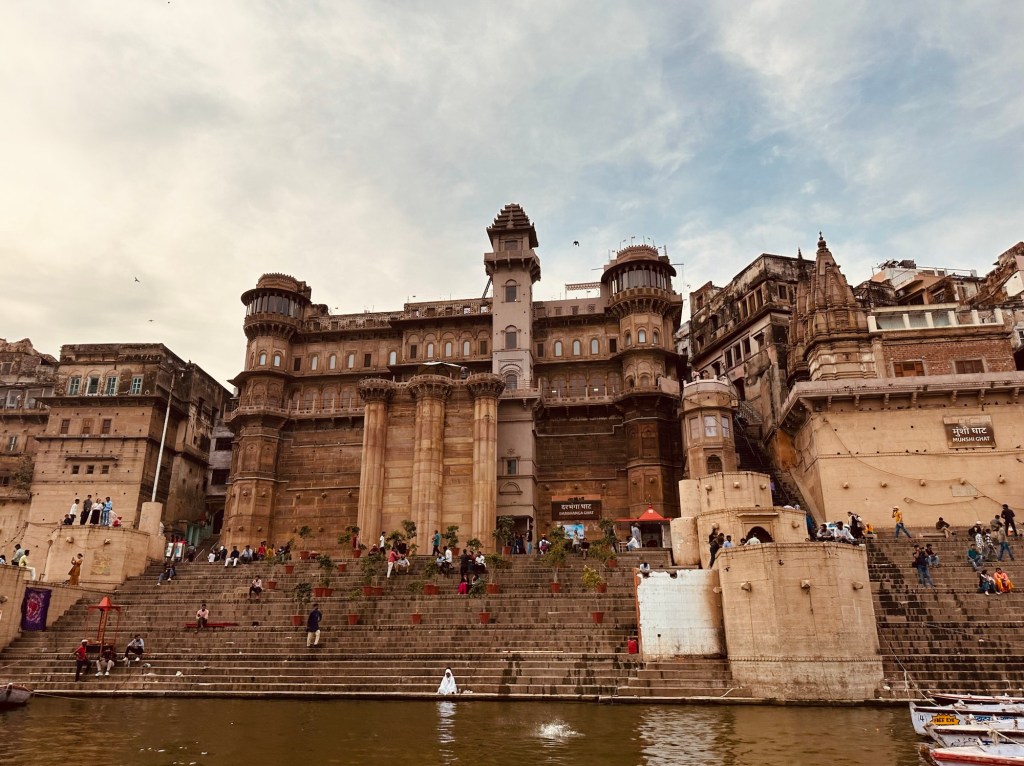
Boating in the river has its own charm and attraction at different hours of the day. The position of the sun, it’s ever changing hues and its reflection in the water present a vast canvas to a photography enthusiast.
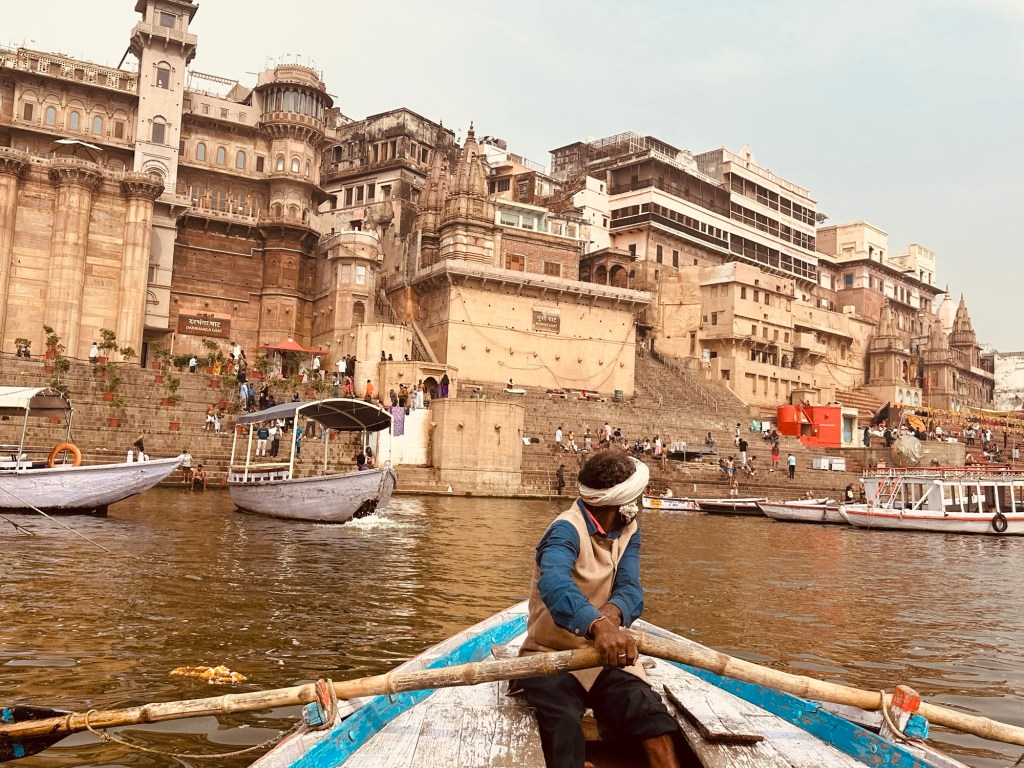
These ghats stand as a testimony to the creation and destruction of the city multiple times. They witness Banaras, sometimes in awe when they see the ocean of humanity striding across the steps to submerge in spiritual fervour, sometimes in grief when they see bodies burning incessantly in their lap, sometimes in ecstasy when bhajans and devotional songs rise to praise the divine and sometimes in joy when they see people enjoying a boat ride at the sunset in the Ganges.
These ghats represent an amalgam of Bhakti (devotion) and Mukti (liberation), a fusion of age-old traditions and elements of modernity, a juxtaposition of life and death, a symphony of tranquil music and strict rituals and a coexistence of wealth and deprivation.
In the city of salvation, the ghats stoically behold every activity of a galloping life. They are unaffected by the human pursuit, yet they observe in silence the impending end. They are there forever as long as this city of light continues to enlighten.


Leave a Reply